Year V - Number 9 - March 2000
month's movies
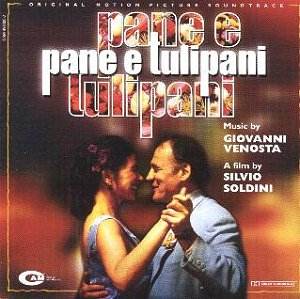
BREAD AND TULIPS
Cast ARTISTIC
Director: Silvio Soldini
Screenplay: Doris Leondeef, Silvio Soldini
Photography: Luca Bigazzi
designer: Paola Bizzarri
Costumes: Music: Giovanni Venosta
Editor: Carlotta Cristiani
Product by: Istituto Luce, RAI Italian Radio and Television, Monogatari (Italy, 2000)
Length: 110 '
Cinema Distribution: Istituto Luce
CHARACTERS AND CAST
Rosalba: Licia Maglietta
Fernando: Bruno Ganz
Constantine: Giuseppe Battiston
Grace: Marina Massironi
"The souls like bodies may die of starvation: give us bread but give us roses too." So read a slogan of American textile workers' strike in the early years of the century. Silvio Soldini use this sentence to create the title of his latest film, replacing the roses to tulips that "filled a thousand years ago - says the director, the gardens of the sultans of many colors that fill the pages The Thousand and One Nights and that was a symbol of desire and love. "
And just by the desire for freedom and human warmth that the film begins, or rather is the heroine, Rosalind, who happened to decide to give a sudden Turning to his life and opt for their desire to live for a long time harp. The story begins with one of those "terrible" that companies organize trips to sell their products, with the participation of Rosalba, a housewife in Pescara, Mimmo , her husband and their two children. The woman, abandoned by mistake autogrill, choose not to be expected to recover, but to go home alone. Along the way he changes his mind and goes to Venice, where it should go only a pair of days. Rosalba finds work at a rather grumpy anarchist florist and is hosted by Fernando, a curious waiter from Iceland, which speaks as a man of the past and fascinating for its mild-mannered woman. The film, though starting from a realistic starting point, frame after frame is transformed into something different, is the star itself to mark this change, a housewife bland, indecisive and not as a woman becomes more self-confident of their abilities and almost "overwhelmed" by his own desire for freedom, finally away from a distracted husband, vulgar thousand light years away from a life among pots and pans.
Throughout the film there is an air suspended between what is the real story of the characters and the dream world of Rosalba that the bearer of his anxieties, but also his aspirations and his deepest desires. The choice of setting the film in Venice increases this feeling of being halfway between reality and dream, in a setting outside of everyday life.
A complete test of all is the wonderful actors who populate the film with bizarre characters, but at the same time real and full of vitality, it is they who "will be exposed - again reveals Silvio Soldini - live and in person before camera. " Excellent proof of Licia Maglietta (Rosalba), we had met Love in already great interpreter harassing (1995) by Mario Martone and The Acrobats (1997) and now the same in the latter test Soldini manages to give life to a character initially faded, but in his quest for freedom is charged new connotations. At his side Bruno Ganz (Fernando), major player, already chosen by Wim Wenders for Wings of Desire (1987), So close so far away (1993) and Theo Angelopoulos Eternity and a Day in the (1998).
http://www.tempimoderni.com/2000/marzo/film/pani/pani.htm
month's movies
BREAD AND TULIPS
Cast ARTISTIC
Director: Silvio Soldini
Screenplay: Doris Leondeef, Silvio Soldini
Photography: Luca Bigazzi
designer: Paola Bizzarri
Costumes: Music: Giovanni Venosta
Editor: Carlotta Cristiani
Product by: Istituto Luce, RAI Italian Radio and Television, Monogatari (Italy, 2000)
Length: 110 '
Cinema Distribution: Istituto Luce
CHARACTERS AND CAST
Rosalba: Licia Maglietta
Fernando: Bruno Ganz
Constantine: Giuseppe Battiston
Grace: Marina Massironi
"The souls like bodies may die of starvation: give us bread but give us roses too." So read a slogan of American textile workers' strike in the early years of the century. Silvio Soldini use this sentence to create the title of his latest film, replacing the roses to tulips that "filled a thousand years ago - says the director, the gardens of the sultans of many colors that fill the pages The Thousand and One Nights and that was a symbol of desire and love. "
And just by the desire for freedom and human warmth that the film begins, or rather is the heroine, Rosalind, who happened to decide to give a sudden Turning to his life and opt for their desire to live for a long time harp. The story begins with one of those "terrible" that companies organize trips to sell their products, with the participation of Rosalba, a housewife in Pescara, Mimmo , her husband and their two children. The woman, abandoned by mistake autogrill, choose not to be expected to recover, but to go home alone. Along the way he changes his mind and goes to Venice, where it should go only a pair of days. Rosalba finds work at a rather grumpy anarchist florist and is hosted by Fernando, a curious waiter from Iceland, which speaks as a man of the past and fascinating for its mild-mannered woman. The film, though starting from a realistic starting point, frame after frame is transformed into something different, is the star itself to mark this change, a housewife bland, indecisive and not as a woman becomes more self-confident of their abilities and almost "overwhelmed" by his own desire for freedom, finally away from a distracted husband, vulgar thousand light years away from a life among pots and pans.
Throughout the film there is an air suspended between what is the real story of the characters and the dream world of Rosalba that the bearer of his anxieties, but also his aspirations and his deepest desires. The choice of setting the film in Venice increases this feeling of being halfway between reality and dream, in a setting outside of everyday life.
A complete test of all is the wonderful actors who populate the film with bizarre characters, but at the same time real and full of vitality, it is they who "will be exposed - again reveals Silvio Soldini - live and in person before camera. " Excellent proof of Licia Maglietta (Rosalba), we had met Love in already great interpreter harassing (1995) by Mario Martone and The Acrobats (1997) and now the same in the latter test Soldini manages to give life to a character initially faded, but in his quest for freedom is charged new connotations. At his side Bruno Ganz (Fernando), major player, already chosen by Wim Wenders for Wings of Desire (1987), So close so far away (1993) and Theo Angelopoulos Eternity and a Day in the (1998).
http://www.tempimoderni.com/2000/marzo/film/pani/pani.htm


0 comments:
Post a Comment